
Designing a merchant referral program to expand Lummo's merchant base by turning existing merchants into growth engines.
+30%
Merchant base growth in first 3 months
50%
More likely to stay active after 6 months
+15%
Platform transactions from new merchants
The Problem
Lummo faced challenges in scaling its merchant platform quickly. Organic growth was steady but insufficient to achieve aggressive acquisition targets. Existing merchants were motivated but needed a tangible reason to actively refer others. Additionally, competitor analysis revealed that no major players in the market were leveraging referral incentives effectively.
The Objective
To increase the merchant base by leveraging existing merchants to refer potential merchants. This initiative was driven by the need to scale quickly and efficiently, with a minimal marketing budget. Through incentivized referrals, we aimed to create a cost-effective growth mechanism that would also foster loyalty among current users.
Research & Insights
A robust user research phase was critical for understanding the needs, motivations, and concerns of Lummo’s merchants, as well as ensuring the referral program design would resonate with them. Given the diversity of merchants on the platform, our research aimed to identify the specific incentives that would drive participation and the barriers that might deter them. This phase also included detailed testing of our referral flows to refine the experience based on real user feedback.
Conducted with 20 Lummo merchants, selected based on their engagement levels on the platform and business types, ensuring a diverse sample that included small, medium, and high-volume sellers.
Focus: Understanding motivations, past experiences with referrals (if any), and expectations around the reward structure. Additionally, the interviews explored merchants' previous experiences with other platforms' referral programs.
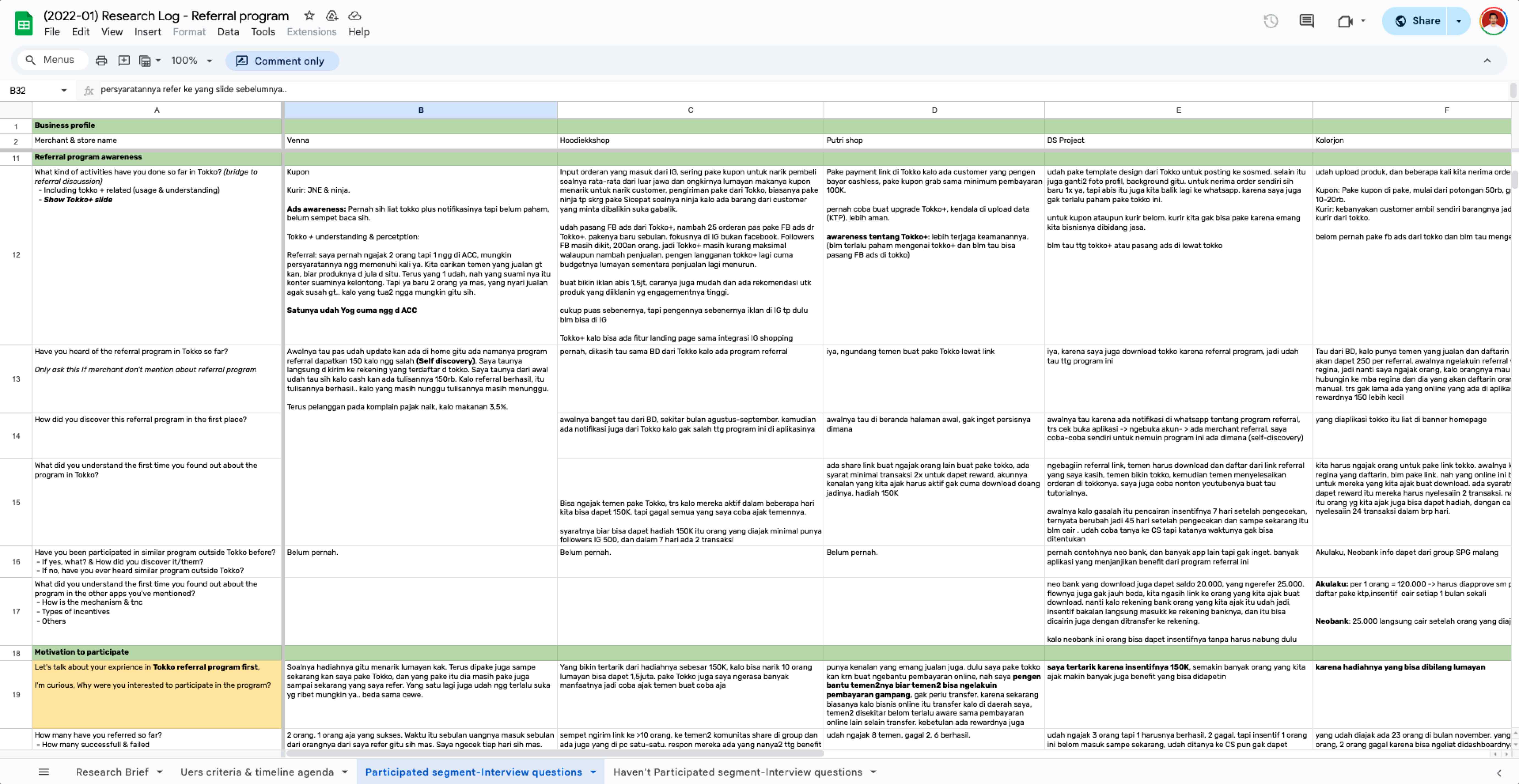
To build a referral program that would stand out in a highly competitive market, I conducted an in-depth benchmarking analysis, examining referral programs from leading platforms within and outside our industry. I focused on both direct and indirect competitors in the e-commerce and B2B space, as well as companies with successful referral mechanisms.
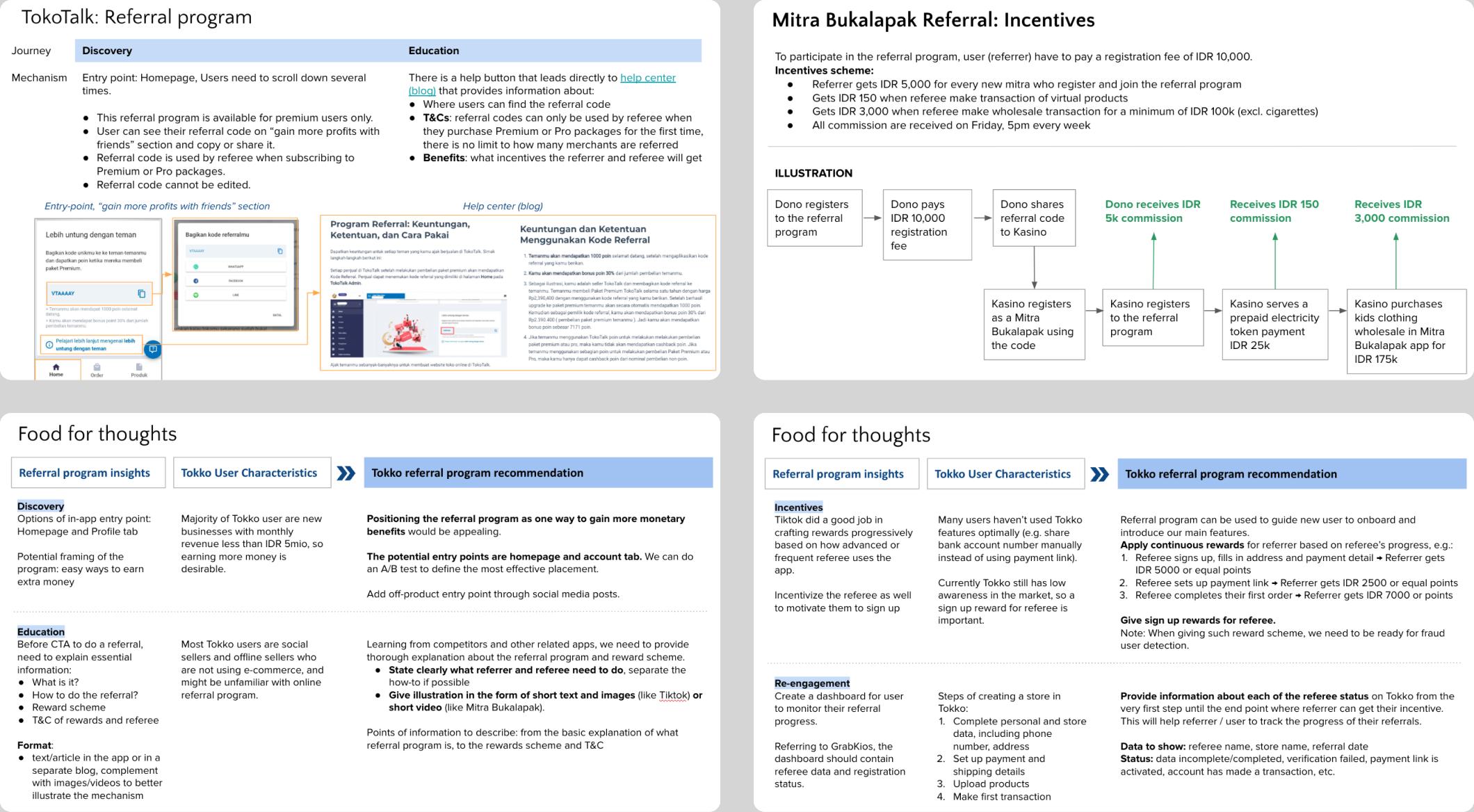
Each of these competitors had attempted various referral strategies, but none had effectively integrated features that aligned with our user-centric goals. Hence, these are the summary of the findings:
Strategy
To drive the growth of our merchant base through peer referrals, we needed to design a referral program that was both intuitive and motivating. Our research highlighted that merchants valued simplicity, transparency, and meaningful rewards. Based on these insights, our strategy was to create a referral experience that encouraged ongoing participation by simplifying the referral process, offering cash-equivalent rewards, and providing clear tracking of referral progress. We aimed to make referrals a seamless extension of our merchants' business activities, allowing them to promote Lummo (LummoSHOP in this case) confidently.
Ideations
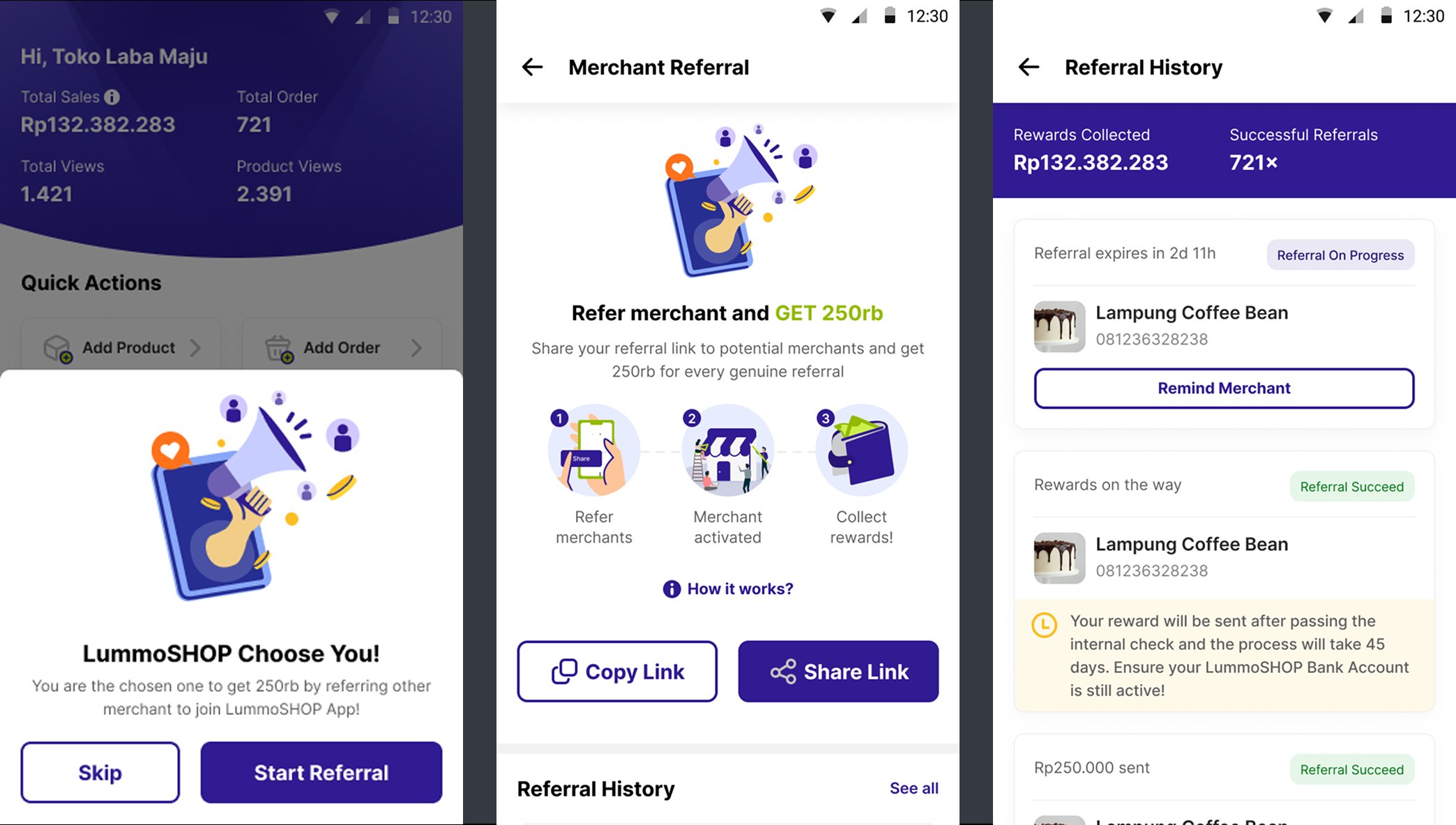
We designed the user journey to ensure easy access and engagement at various touchpoints. On the homepage, first-time visitors see a referral icon and a banner introducing the program, while returning users are provided with a direct link, reducing unnecessary repetition. In the Account Page, merchants get a quick summary of their referral progress, displaying the total number of referrals, successful activations, and rewards earned, with a clear call-to-action link to encourage further participation. To maximize engagement, an activity-based pop-up appears when merchants process a high number of transactions in a day, prompting them to invite others to join the program.
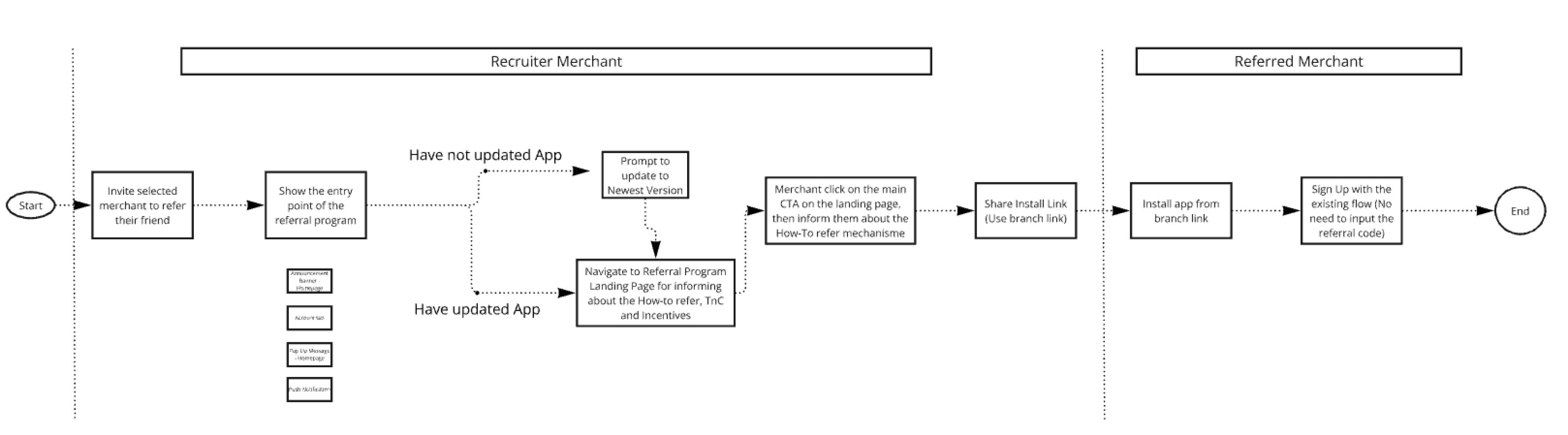
The core of the experience is the Referral Page, where merchants can easily navigate through the program. It includes a simplified guide on how to refer, a shareable referral link, and real-time referral status updates that show progress and rewards. This journey effectively integrates reminders and incentives at key moments, helping to drive continuous engagement and make the referral experience rewarding and seamless.
In the initial wireframing phase, we focused on designing a user journey that would feel seamless and intuitive for merchants, helping them understand and engage with the referral program quickly. The wireframes aimed to clearly outline each step of the referral process while maintaining a user-friendly interface.
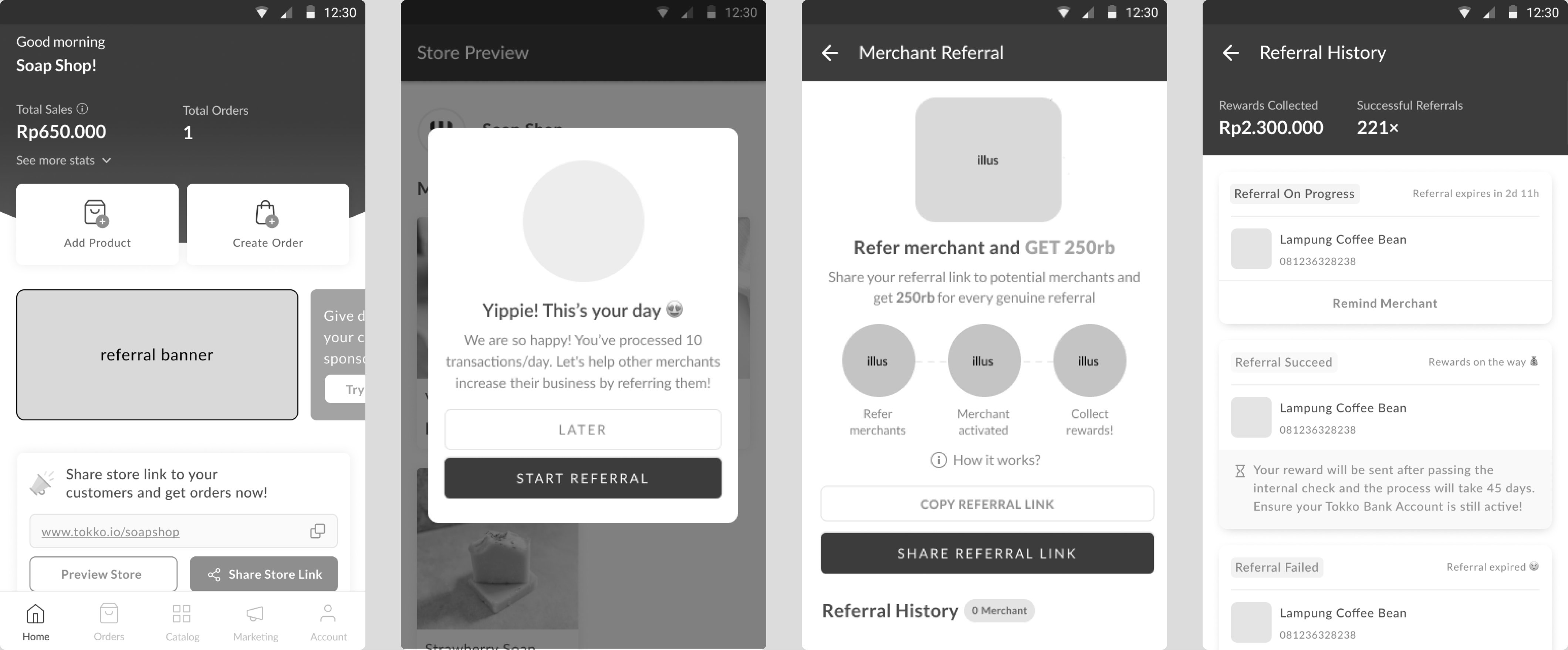
Key screens included the homepage with the referral banner, the achievement pop-up to celebrate high transaction activity and convert it to referral attempts, and the main referral page detailing the programs rewards and tracking features. celebrate high transaction activity and convert it to referral attempt
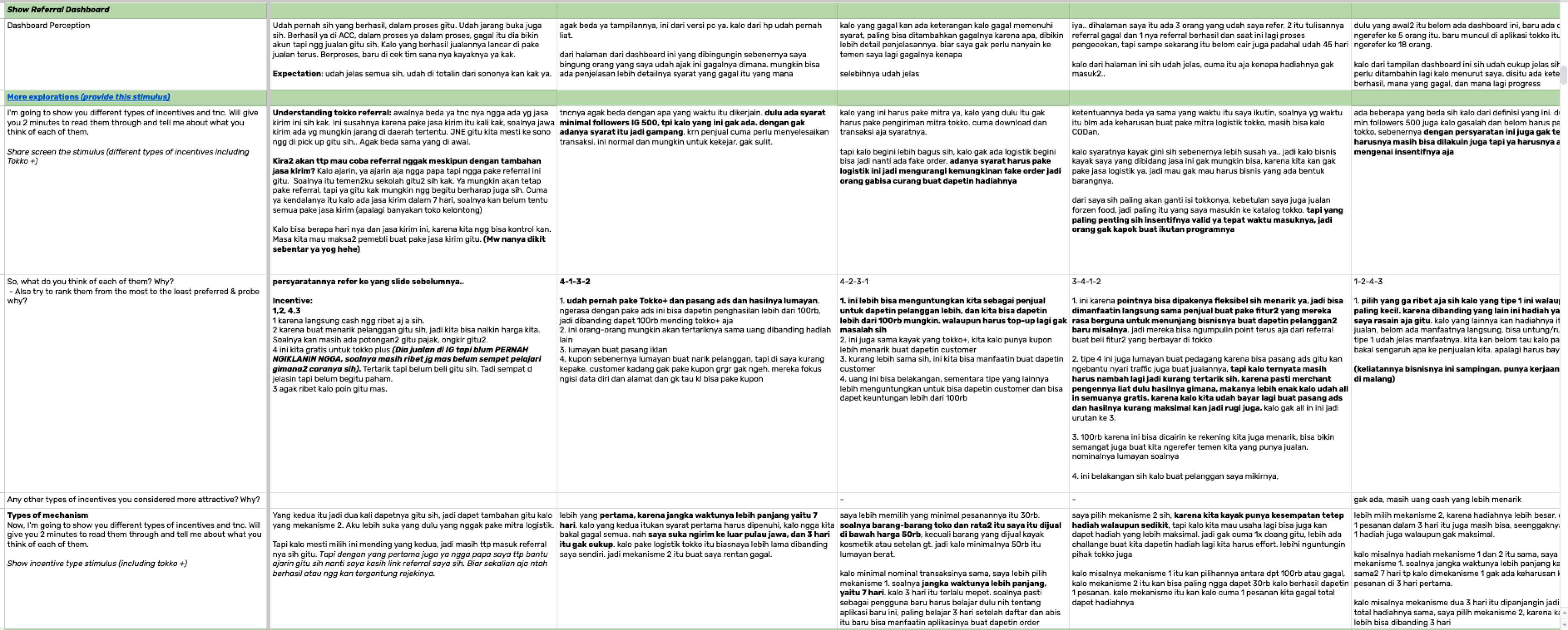
We round of user testing focused on validating both the user journey and specific features. Our primary goals were to assess how easily users could understand the referral process, share their referral link, and track their progress and rewards. Additionally, we wanted to ensure that the design communicated the value of the program effectively, motivating merchants to participate.
We recruited a diverse group of merchants with varying levels of familiarity with digital tools, aiming to cover a range of technical proficiency levels. The testing involved both guided and unguided tasks, allowing us to observe users as they navigated the referral program independently.
Final Result
Based on the discussion with the business and marketing team, we agree to release the initial version first which was the one-sided incentive, where only the referrer would earn rewards for bringing new merchants to the platform. This is to keep things simple and validated the effectiveness of the referral concept. This version allowed us to gather data on merchant engagement and iterate based on feedback.
Our MVP version of the Merchant Referral Program was designed to be simple and straightforward. Activated merchants those who have successfully completed at least two orders for two different customers could immediately start referring other potential merchants. From a UX perspective, we kept the process intuitive and easy to navigate, with a focus on familiarizing users with the basic referral rules. Clear instructions and minimal steps allowed merchants to understand how the program worked without overwhelming them, creating a seamless experience that encouraged engagement from the start
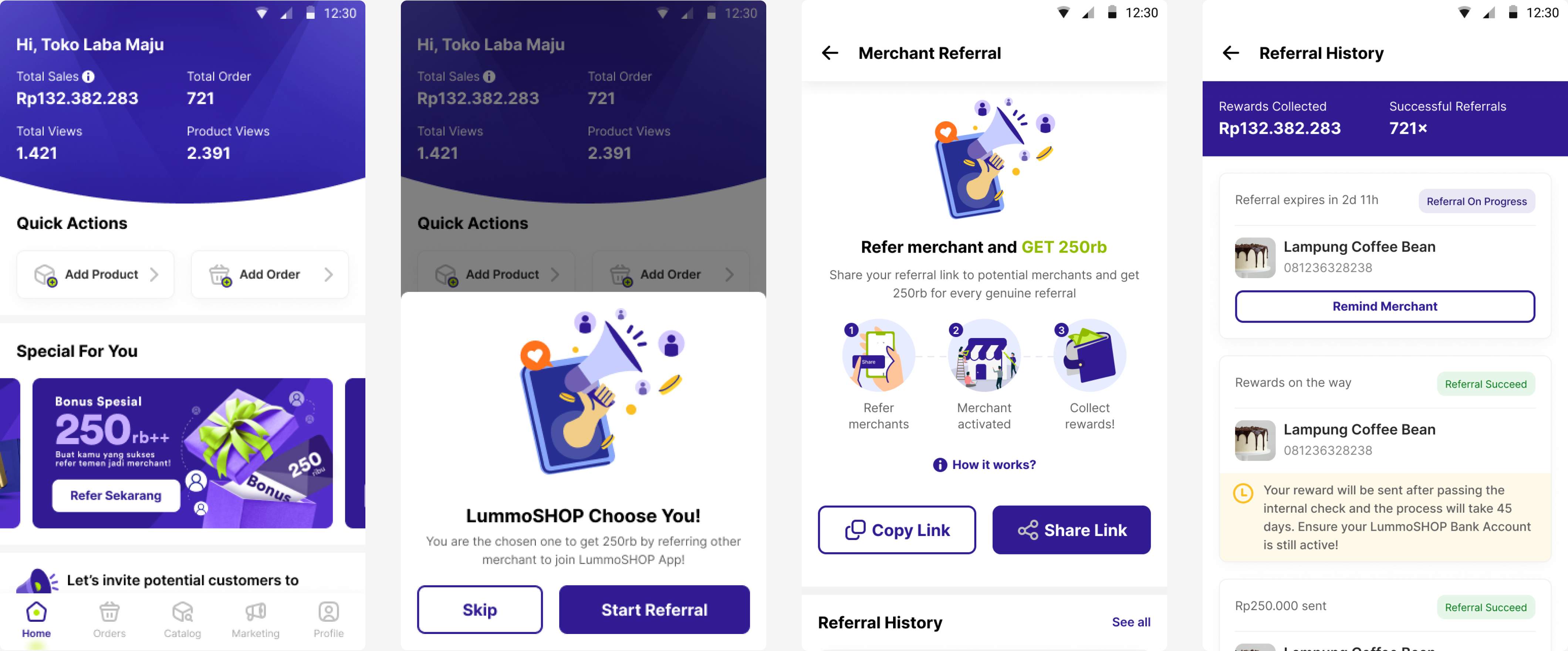
Following the positive results from the MVP version, which showed a ~20% increase in activated merchants, we rolled out a two-sided incentive structure where both the referrer and the referee could earn rewards.
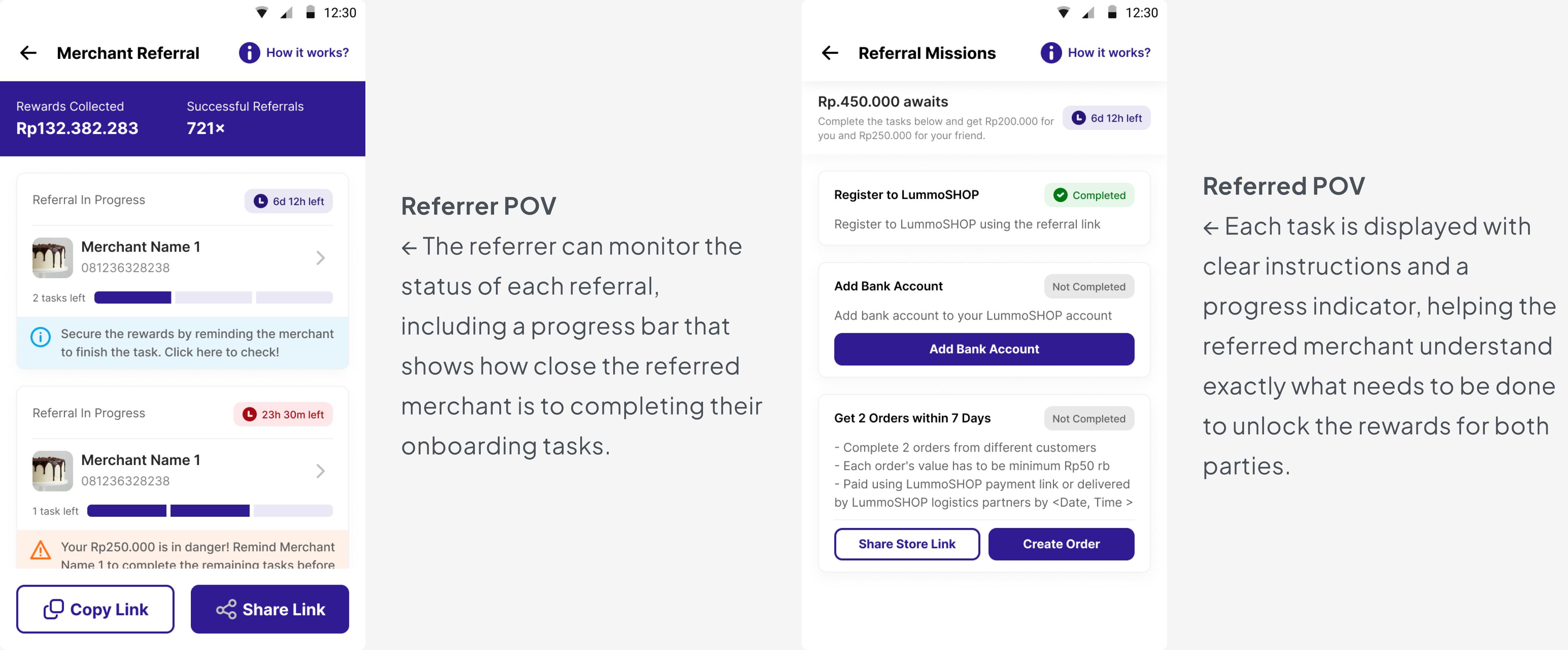
In the two-sided referral model, both the referring merchant (referrer) and the newly invited merchant (referred) have unique engagement points and incentives within the platform. This approach encourages active participation and fosters a sense of collaboration between the two roles, as each party has specific tasks to complete to unlock rewards.
Impact
The referral program led to a 30% increase in the merchant base within the first three months post-launch, demonstrating the effectiveness of peer-to-peer referrals as a growth strategy.
Merchants who participated in the referral program were 50% more likely to stay active on the platform after six months, showing that incentivized engagement helped foster loyalty.
The introduction of new merchants and sustained engagement led to a 15% increase in platform transactions, benefiting overall revenue.
With positive feedback and metrics from users, the program validated the importance of incentives in driving user acquisition and retention, especially in competitive markets.
Personal Takeaways
Post-MVP explorations revealed that offering LummoPLUS services (Lummo’s premium services) could be as compelling as cash rewards. Merchants showed interest in leveraging premium features like ‘facebook advertising credits’ to grow their businesses. Implementing A/B testing to compare the effectiveness of cash versus service-based incentives can help determine the best approach to motivate users.
Our weekly reviews of fraud patterns allowed us to adapt our detection methods effectively. However, the high cost and effort associated with preventing fraud raised critical questions: “are the merchants we attract through this referral program truly valuable, and do the benefits of these incentives outweigh the associated risks?” These insights highlighted the importance of ongoing fraud prevention strategies in maintaining the integrity of the referral program, ensuring that only genuine and high-quality merchants benefit from the incentives provided
Redesigned CarWatch so it arms and disarms itself based on the driver's phone location and ignition …
+13%
Stolen vehicle recovery rate
Simplify the resume creation process so that job seekers are able to create high-quality resumes effortlessly, …
134x
CV upload growth within 8 months
A fast-turnaround website rebuild for a Bali-based architecture studio targeting expatriates and investors in the luxury …
52%
Visitor Growth
Turning a young architecture studio's PDF-only portfolio into a website that helped it grow from 8 …
From 8 to 21
Projects Delivered Since Launch